Dashboarding
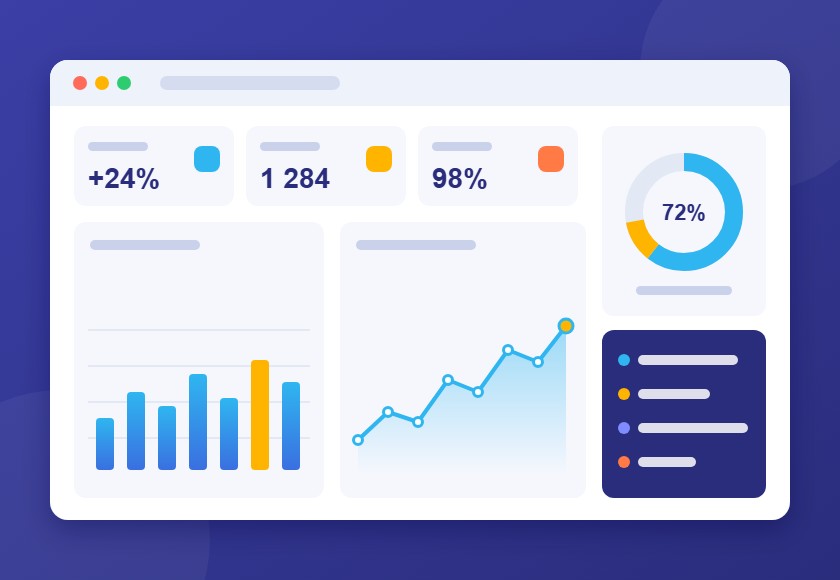 While many users find business intelligence solutions too static or too difficult to use, the dashboard is a key element for providing concise, easily accessible information. It represents a maximum of information in a minimum of space, using strong interactivity and multiple graphical components.
Every dashboard is different
Depending on user needs and the various solutions on the market, it is possible to build dashboards of varying complexity and interactivity, handling high data volumes, with advanced graphics, mapping,...
This type of project is not easy to manage. It is hard to write traditional specifications to define a dashboard's user experience. It requires building a solution that meets interactivity, usability and creativity criteria while respecting the following constraints:
- Delivering user satisfaction
- Delivering user satisfaction
- Taking new presentation channels into account
- Meeting environment-specific standards
- Taking new presentation channels into account
- Meeting environment-specific standards
A tailored approach: Agile BI and storyboarding
As part of our approach, we use Agile BI and build a storyboard that explicitly details the expected look and behavior of the dashboard. It is a flexible, iterative tool that defines and illustrates the user experience. It gives a fairly accurate picture of the final result. Understandable by everyone, it is a key communication tool in this type of project.
When building the storyboard, every element that defines the user experience is taken into account, in particular:
- ease of use
- the relevance of the highlighted information
- how information is organized on the sheet and in relation to each other
- how easy it is to find useful information
- interactions
To maximize the user experience, we rely on many other usability principles and on our web design studio.
E-solution has extensive experience implementing dashboards and a global view of the solutions on the market. We can help you find the solution best suited to your functional and technical context.

